






Air Conditioning usually starts subtly.
No alarms. No obvious failure. Just a quiet moment where something feels… off.
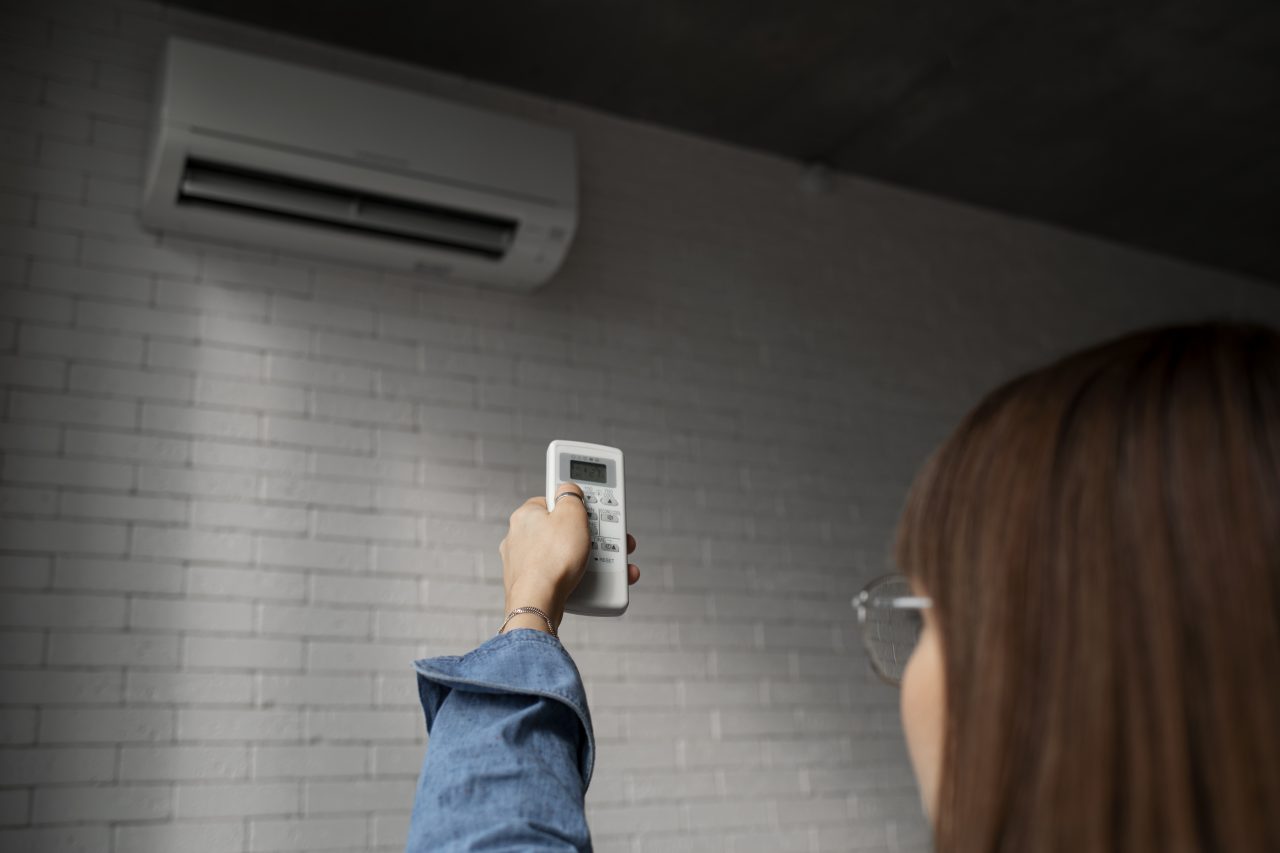
You’re sitting in the office, or walking through your shop floor, and you realise the space isn’t cooling the way it should. The air conditioning is running — you can hear it — but the air coming out doesn’t feel cool. Give it a few minutes, you think. It’ll settle. It doesn’t. Instead, the room gets warmer. Staff start noticing. Someone adjusts the controller. Someone else says it’s been like this all morning. And suddenly, what felt like a minor issue turns into a proper problem.
Air conditioning blowing warm air is one of those faults that catches people off guard because the system looks like it’s working. It hasn’t stopped. It hasn’t gone silent. It’s just… not doing its job. And that’s where the confusion begins. The first thing to understand is this: air conditioning doesn’t “create cold air” — it removes heat. If warm air is coming through, it usually means that heat isn’t being removed properly somewhere in the system.
In most cases, the issue sits outside, not inside. The indoor unit is simply pushing air into the room. The real work — the part that actually cools — happens at the outdoor unit. If that stops working, even partially, you’re left with a system that runs but doesn’t cool. We see this all the time. The indoor unit is on, airflow feels normal, but step outside, and the external unit is silent. No fan, no compressor, nothing. At that point, the system isn’t cooling — it’s just circulating air.
Sometimes it’s something simple, like a power issue. A breaker may have tripped, or the supply has dropped out without anyone noticing. Other times, it’s a fault that’s forced the system to shut itself down for protection. Either way, the result is the same: warm air indoors, rising temperature, and growing frustration. Then there are the slower faults — the ones that build quietly over time.
A system might still cool slightly, but not enough. You might notice it taking longer to bring the temperature down or struggling during warmer parts of the day. Eventually, that slight drop in performance becomes obvious. The air no longer feels cool at all. This is often where refrigerant comes into the picture.
If levels are low, the system can’t absorb heat properly. It keeps running, keeps trying, but never quite gets there. From the outside, it looks like it’s working harder than usual — longer run times, less result. It’s not a sudden failure. It’s a gradual decline. And by the time it becomes noticeable, it usually needs proper attention.
Another common cause is far less technical, but just as impactful.
Filters.
It’s one of those things that gets overlooked because it doesn’t feel urgent. But when airflow is restricted, the system can’t operate properly. It overheats, struggles, and in some cases, starts protecting itself by reducing performance.
What you feel indoors is warm, weak air — even though the system is technically still running. It’s a small issue that turns into a bigger one simply because it’s left too long. Of course, there are also the more serious faults — the ones that don’t resolve themselves and don’t improve with basic checks.
The compressor, for example, is central to the entire cooling process. If it isn’t working properly, the system cannot do what it’s designed to do. You might still get airflow, you might still hear the unit running, but without that core function, cooling simply doesn’t happen.
These are the situations where guessing doesn’t help. The system needs to be checked properly, with the right tools and experience. What makes this issue particularly frustrating is how misleading it is. If a system stops completely, it’s clear something’s wrong. You call someone, get it fixed, move on.
But when air conditioning is blowing warm air, it sits in that grey area. It feels like it should be working. It almost works. And that delay — that hesitation — often means the problem is left longer than it should be.
Meanwhile, the environment keeps getting warmer. In commercial spaces, that matters more than people realise. It’s not just about comfort. It’s about how the space functions.
An office that’s too warm affects concentration. A retail space that feels uncomfortable affects how long customers stay. In more sensitive environments, like server rooms or storage areas, rising temperatures can lead to far more serious consequences.
What starts as a mild inconvenience can quickly turn into disruption. So what should you do when it happens? Start simple. Check the obvious things — settings, power, and whether the outdoor unit is running. Sometimes, the answer is straightforward. But if everything appears normal and the system still isn’t cooling, it’s time to act properly.
Because systems don’t fix themselves. And running a faulty air conditioning system often makes things worse, not better. The truth is, most of these issues are preventable.
Regular maintenance catches problems early. Filters get changed before they block airflow. Refrigerant levels are checked before performance drops. Components are monitored before they fail. It’s not about avoiding every issue — that’s unrealistic. But it’s about avoiding the kind that show up at the worst possible time. Because they always do.
And that’s usually how these situations end. Not with a dramatic breakdown, but with a gradual realisation that something isn’t right — followed by a decision to deal with it properly.
The sooner that happens, the easier the fix.
Need It Sorted Quickly?
If your air conditioning is blowing warm air and the space is getting uncomfortable, it’s worth getting it checked before it turns into a bigger issue.
Call ADK Kooling on 020 3909 9729 – We’ll find the fault and get your system cooling properly again.